
Molly laughed with her lips flat. “And what good is it to me that you’re here now? Where were you twenty years ago, ten years ago? How dare you, how dare you, come to me now, when I am this?” With a flap of her hand she summed herself up: barren face, desert eyes, and yellowing heart. “I wish you had never come, why do you come now?” The tears began to slide down the side of her nose.
-The Last Unicorn, Peter S. Beagle
The last unicorn in the world goes on a quest to find what became of the rest of her kind, and along the way, learns what it means to be human. That could be the tagline of what is arguably the masterpiece among Peter S. Beagle’s many books: The Last Unicorn. First published in 1968, this novel has remained a fantasy classic for a reason and is a story that I immensely enjoyed reading for Beagle’s magical writing style, memorable characters, and themes of love and loss, mortality, and perhaps importantly, the departure of nature from modernity. More on that last theme at the end of this post!
What The Last Unicorn does so well is that it takes a simple premise and emboldens it with such touching themes. A unicorn searching for other unicorns could be the plot of a Pre-K book (and there would be nothing wrong with that, for younger readers need magical stories just as much as older readers) but instead, Beagle transforms the concept into an emotionally rich journey. The Unicorn is not just searching for others like her–she is searching for her place in a world that she does not recognize, a world that has forgotten her. This makes the Unicorn an engaging and relatable protagonist, for who has not felt like they no longer fit in with the machines of the modern world?
The Unicorn is joined by some unforgettable characters on her quest. The best of these are Schmendrick, the world’s worst magician who is hilarious and endearing, and Molly Grue, a weary middle-aged woman who was part of a band of outlaws. It is Molly who delivered the lines quoted at the beginning of this post. Upon seeing the Unicorn, Molly is stricken with grief that she is being visited by a unicorn when she is old and broken, and not as a young girl. It is a moment of poignant mortality for those of us who have felt the weight of years pressing down on us. There is also Prince Lir, a character who represents what the Unicorn could have if she chooses to stay as a mortal and abandon her quest.
For the Unicorn becomes a woman. When a desperate attempt at magic from Schmendrick transforms the Unicorn into a human form, she becomes the Lady Amalthea. She could stay human, give up her search for the rest of her kind, and forget that she was ever a unicorn. That is what the Unicorn grapples within the novel: what life as a human means, and what it is to fall in love.
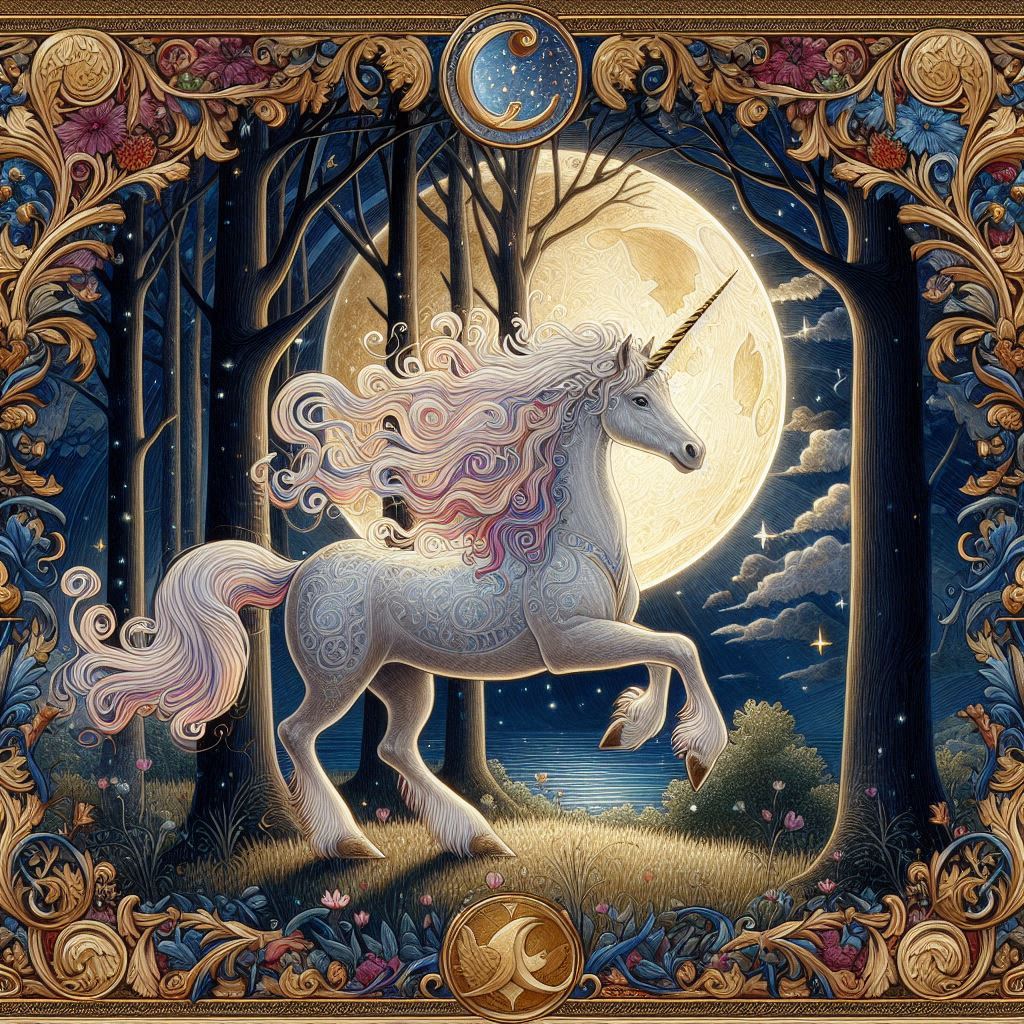
Beneath the magic, humor, and adventure, there is an underlying somber tone to The Last Unicorn. The feeling of being eclipsed by a world that has forgotten you, or maybe that you have forgotten, is one that rings true with me, and possibly you, too. That tone comes from Molly Grue’s monologue on the Unicorn coming for her too late. It comes from Schmendrick’s failed attempts at being the magician he wishes to be. It even comes from the book’s antagonist, King Haggard, who we learn is as beaten and weathered as his name implies. This makes Beagle’s novel really stand out to me. I enjoyed reading a fantasy story with a deep sadness hiding beneath the surface. That somberness echoes through the titular song, “The Last Unicorn,” from the 1982 animated film that adapts the novel, a film that older readers may recall from their childhood. That song was sung by America, one of my favorite musical artists.
When the last eagle flies
Over the last crumbling mountain
And the last lion roars
At the last dusty fountain
In the shadow of the forest
Though she may be old and worn
They will stare unbelieving
At the Last Unicorn
These lyrics make me reflect on the theme I most took away from the novel: the disappearance of nature from the modern world. The Unicorn is an enduring symbol of the magic of nature. The feeling of being in a woodland meadow, surrounded by wildflowers, with sunshine on your back and dew on the grass. Imagine that there are no more sunlit meadows. No more wildflowers in the morning dew. The way I read the story, The Last Unicorn is a message about the loss of the natural world and the way the Earth once was, in an earlier time, gone forever as modernity marches on. Perhaps after the last car grinds to a halt, there will be a chance for nature to rebuild what we humans have taken away from her.
On a final note, a question I had while reading the novel is this: Could a reader interpret The Last Unicorn as a piece of historical fantasy? In some ways, perhaps, but not in the traditional sense of being set in a recognizable historical time period with magical elements. Then again, the story is interwoven with our mythology, seen in the harpy Celaeno, taken from Greek mythology, and the illusion of Robin Hood and the Merry Men that deceives the band of outlaws. These are myths from our world, which means a reader could view Beagle’s book as being set in a fantasy version of our own historical world. At the end of the day, whether The Last Unicorn is a work of historical fantasy does not matter for the reader to enjoy its wonderfully humorous, secretly forlorn story.
The Last Unicorn by Peter S. Beagle is a classic fantasy novel that has been around for nearly sixty years. It is an enduring story of love, loss, and what it means to be human. I cannot recommend it enough. One day, there may be a blog post discussing the 1982 animated film on Farrwood.org! Keep an eye out.
Thank you for reading this blog post! Peace to you, always.

 Farrwood